¿Llega desde las fichas en español del Instituto Nacional de Salud de EE. UU. (NIH GARD) o busca el manual clínico en español? Acceda directamente al capítulo actualizado a 2026 según el síndrome:
1. Three Distinct Chromosomal Disorders — Never One Condition
Families newly referred to genetics, pediatrics, or neurology clinics frequently encounter outdated hospital handouts written around the 1987 National Institutes of Health consensus conference. Between 2021 and 2025, three landmark clinical shifts transformed bedside diagnosis and systemic treatment across the entire spectrum: first, the revised international diagnostic criteria separating NF1 from benign Legius syndrome (Legius et al., 2021); second, the unified schwannomatosis nomenclature retiring the confusing "NF2" label (Plotkin et al., 2022); and third, the regulatory approval of two oral allosteric MEK1/2 inhibitors—selumetinib (Koselugo) and mirdametinib (Gomekli)—capable of shrinking inoperable NF1 plexiform neurofibromas without cytotoxic chemotherapy.
At the cellular level, each disorder disrupts a completely different signaling cascade inside Schwann-cell lineages. In NF1, loss of functional neurofibromin (a GTPase-activating protein encoded across 57 constitutive exons on 17q11.2) leaves proto-oncogenic RAS locked in its active GTP-bound conformation, driving downstream RAF–MEK–ERK proliferation across Schwann cells, melanocytes, astrocytes, and osteoclasts. In NF2-related schwannomatosis, inactivation of merlin (moesin-ezrin-radixin-like protein on 22q12.2) dysregulates Hippo/YAP contact inhibition, mTORC1, and VEGF-mediated vascular permeability along the eighth cranial nerve, arachnoid cap cells, and spinal ependyma. In SMARCB1- and LZTR1-related schwannomatosis, tumor formation requires a distinct three-step, four-hit cascade involving germline 22q11.2 mutation, somatic loss of the trans 22q chromosome arm, and an independent somatic point mutation in the remaining NF2 allele inside each peripheral schwannoma.
In children or adults with NF1, persistent pain lasting >2–4 weeks or waking the patient from sleep, rapid focal enlargement, new motor weakness, or a change from soft compressible tissue to firm/stone-hard induration inside a plexiform neurofibroma requires expedited evaluation with 18F-FDG PET/CT (SUVmax ≥ 3.5) and diffusion-weighted MRI (Chapter 6 MPNST Gate) to exclude malignant peripheral nerve sheath tumor (MPNST, 8%–13% lifetime NF1 risk).
| Disorder (2022 Name) | Gene & Locus | Birth Incidence & Inheritance | Hallmark Clinical Features & First-Line Targeted Therapy |
|---|---|---|---|
| Neurofibromatosis Type 1 (NF1) | NF1 · 17q11.2 Neurofibromin (RAS-GAP) |
1 in 2,500–3,000 50% inherited / 50% de novo |
≥6 café-au-lait macules, axillary/inguinal freckling, cutaneous & plexiform neurofibromas (30%–50%), optic glioma (15%–20%), Lisch/OCT choroidal spots. Oral selumetinib or mirdametinib. |
| NF2-Related Schwannomatosis | NF2 · 22q12.2 Merlin (Schwannomin) |
1 in 25,000–33,000 High mosaicism (~50%–60% de novo) |
Bilateral vestibular schwannomas (tinnitus, speech discrimination loss, disequilibrium), cranial/spinal meningiomas (50%–60%), cervical ependymomas, juvenile cataracts. IV bevacizumab & cochlear preservation. |
| SMARCB1 / LZTR1 Schwannomatosis | 22q11.2 SMARCB1, LZTR1 |
1 in 60,000–70,000 Incomplete penetrance (esp. LZTR1) |
Multiple non-vestibular spinal root and peripheral nerve schwannomas presenting at ages 25–45 with severe focal or radicular neuropathic pain (unilateral VS in 7%–10% of LZTR1). Intracapsular nerve-sparing enucleation. |
| Legius Syndrome (Differential) | SPRED1 · 15q14 RAS-MAPK brake |
~1 in 40,000–75,000 2%–8% of pigment-only referrals |
Multiple café-au-lait macules and skinfold freckling clinically identical to NF1, without neurofibromas, optic gliomas, Lisch nodules, or MPNST risk. Spares lifelong tumor imaging. |
2. Interactive 2021 NF1 Diagnostic Criterion Checker
Select observed clinical or molecular findings below to evaluate against the International Consensus Group on Neurofibromatosis Diagnostic Criteria (Legius et al., 2021). In a child or adult without an affected parent, two or more clinical criteria establish NF1; when a biological parent has confirmed NF1, one additional criterion is sufficient:
3. Nerve-Sheath Microanatomy & 2025–2026 Targeted Therapy
Understanding how neurofibromas and schwannomas interact microscopically with functional nerve axons explains why NF1 plexiform tumors respond to oral MEK1/2 blockade (Chapter 5), whereas encapsulated schwannomas are managed through intracapsular microsurgical cleavage planes or anti-VEGF therapy:
Following the pediatric SPRINT trial (Gross et al., NEJM 2020; 68% volumetric partial response rate) and adult Phase III KOMET data for selumetinib (Koselugo, 25 mg/m² BID continuous), the February 2025 FDA approval of mirdametinib (Gomekli, 2 mg/m² BID on a 21-days-on / 7-days-off cycle) based on the pivotal ReNeu study (Moertel et al., JCO 2025) expanded approved oral options to both adults and children aged ≥2 years, including a 1 mg water-dispersible pediatric tablet for patients unable to swallow intact capsules.
4. First 90 Days After Diagnosis: Specialist Triage & Baseline Workup
The first three months after a suspected or newly confirmed diagnosis often generate intense anxiety and fragmented subspecialty orders. Use the three-syndrome baseline matrix below (aligned with AAP Miller et al., 2019 and ERN GENTURIS guidelines) to coordinate initial referrals in chronological priority:
| Syndrome | Infants & Children (0–12 yr): First-90-Day Baseline | Adolescents & Adults (13–50+ yr): First-90-Day Baseline |
|---|---|---|
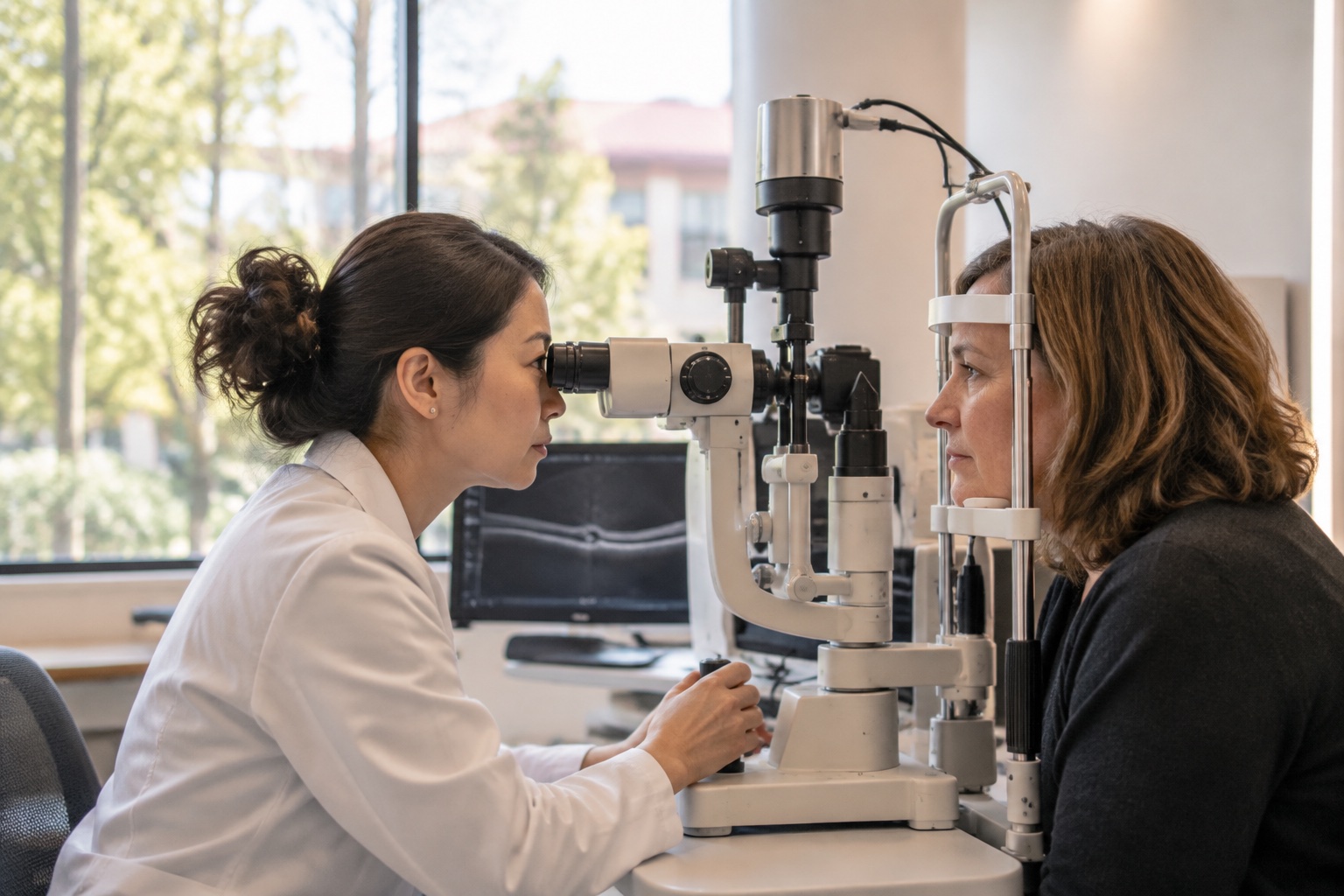
| NF1 (or Suspected CALMs) | 1. Paired RNA/DNA NF1 + SPRED1 blood/saliva panel (if pigment-only or first in family). 2. Pediatric neuro-ophthalmology exam (age-matched visual acuity, pupils, motility, slit-lamp & non-sedated NIR-OCT). 3. Physical exam: inspect bilateral shins for anterolateral tibial bowing, measure blood pressure, plot NF1 growth/head circumference, screen pre-school speech/attention. Avoid routine sedated brain MRI if eye exam is normal. |
1. Baseline clinical tumor mapping + seated blood pressure (screen plasma free metanephrines if hypertensive, tachycardic, or planning pregnancy/surgery). 2. Transition/baseline whole-body STIR MRI (ages 16–20+) to quantify internal plexiform burden. 3. Women aged ≥30 yr: enroll in annual contrast breast MRI (± mammography). 4. Genetic counseling on 50% autosomal dominant inheritance & PGT-M options (Chapter 8). |
| NF2-Related Schwannomatosis | 1. High-depth germline + mosaic NF2 panel; slit-lamp & retinal OCT for posterior subcapsular cataract or epiretinal membrane (often precedes hearing loss by years). 2. Baseline cranial MRI with 1–1.5 mm thin cuts through internal auditory canals (IAC) ( typically starting age 10 yr, or earlier in severe truncating familial variants) + whole-spine MRI. 3. Age-appropriate pure-tone & speech audiometry. |
1. High-resolution 1 mm IAC brain MRI + whole-spine T1+C/T2 MRI (stage vestibular schwannomas, meningiomas, and cervical ependymomas). 2. Standardized 50-word monosyllabic Word Recognition Score (WRS) audiometry. 3. Multidisciplinary NF2 skull-base board review before any surgery/radiosurgery (assess IV bevacizumab & cochlear nerve preservation). |
| SMARCB1 / LZTR1 Schwannomatosis | Rare symptomatic onset in childhood; if familial variant known, perform targeted clinical neurological exam and defer imaging unless localized pain or focal paresthesia develops (SMARCB1 carriers require awareness of rare infantile rhabdoid risk in very early childhood). | 1. Paired germline blood NGS (SMARCB1, LZTR1, NF2) + two-tumor somatic sequencing if surgical tissue exists. 2. Whole-body coronal STIR + spine MRI to correlate occult subcentimeter schwannomas with pain dermatomes. 3. Multimodal neuropathic pain titration (gabapentinoids / duloxetine) & peripheral-nerve microsurgeon evaluation. |
Five High-Yield Questions to Bring to Your First NF Clinic Appointment
- Molecular specificity: Should we order a paired RNA+DNA NF1/SPRED1 panel (or NF2/LZTR1/SMARCB1 panel with somatic tumor testing) so benign mimics and mosaicism are not missed?
- Non-sedated eye or hearing baseline: Can my child's optic pathway be tracked quantitatively with annual visual acuity and near-infrared OCT instead of repeated sedated brain MRIs?
- Targeted systemic eligibility: If an internal plexiform neurofibroma or vestibular schwannoma is causing pain or functional decline, are we candidates for oral MEK1/2 inhibition (Koselugo / Gomekli) or low-dose IV bevacizumab before considering surgery?
- Red-flag escalation protocol: Which exact symptoms (waking night pain, rapid growth, stone-hard induration, sudden WRS hearing drop, or paroxysmal hypertension) should prompt an urgent unscheduled message to this team?
- Family cascade & school/work support: Which first-degree relatives need a slit-lamp skin/eye exam or targeted variant test, and should we establish proactive school executive-function accommodations (IEP/504) now?
Frequently Asked Clinical Questions
Can Neurofibromatosis Type 1 turn into NF2 later in life?
No. NF1 is caused by variants in the NF1 gene on chromosome 17q11.2, whereas NF2-related schwannomatosis is caused by variants in the NF2 gene on chromosome 22q12.2. One condition never transforms into the other.
Does having more cafe-au-lait spots mean a child will have more severe NF1?
No. Whether a child has 6 cafe-au-lait macules or 25 macules has zero correlation with internal tumor burden, optic glioma risk, learning profile, or long-term clinical severity.
What are the two FDA-approved oral medications for NF1 plexiform neurofibromas?
Selumetinib (Koselugo), taken twice daily across a continuous 28-day cycle, and mirdametinib (Gomekli, approved February 2025 for adults and children aged 2 years and older), taken twice daily for 21 days on and 7 days off with a water-dispersible pediatric tablet option.
Why do four official US NIH GARD Spanish pages link to nfcol.net?
Between 2010 and 2019, nfcol.net operated as the Spanish educational portal Todo Sobre Neurofibromatosis and was indexed across the US National Institutes of Health GARD pages for Neurofibromatosis, NF1, NF2, and Schwannomatosis. All historical Spanish paths remain preserved and updated to 2026 clinical consensus.
Should an asymptomatic infant with isolated cafe-au-lait spots undergo a sedated brain MRI?
No. International AAP and ERN GENTURIS guidelines advise against routine screening brain MRI under sedation in visually asymptomatic infants, recommending paired NF1 and SPRED1 genetic testing alongside pediatric neuro-ophthalmology evaluations.
Key Consensus Guidelines & Primary Sources
- Legius E, Messiaen L, Wolkenstein P, et al. Revised diagnostic criteria for neurofibromatosis type 1 and Legius syndrome: an international consensus recommendation. Genetics in Medicine. 2021;23(8):1506–1513. PubMed 34012067.
- Plotkin SR, Messiaen L, Legius E, et al. Updated diagnostic criteria and nomenclature for neurofibromatosis type 2 and schwannomatosis: an international consensus recommendation. Genetics in Medicine. 2022;24(9):1967–1977. PubMed 35674741.
- Gross AM, Wolters PL, Dombi E, et al. Selumetinib in children with inoperable plexiform neurofibromas (SPRINT Phase II). New England Journal of Medicine. 2020;382(15):1430–1442. PubMed 32187457.
- Moertel CL, Hirbe AC, Shuhaiber HH, et al. ReNeu: A pivotal phase IIb trial of mirdametinib in adults and children with symptomatic neurofibromatosis type 1-associated plexiform neurofibroma. Journal of Clinical Oncology. 2025;43(7):758–769. PubMed 39514828.
- Miller DT, Freedenberg D, Schorry E, et al. Health supervision for children with neurofibromatosis type 1 (American Academy of Pediatrics). Pediatrics. 2019;143(5):e20190660. PubMed 30988031.